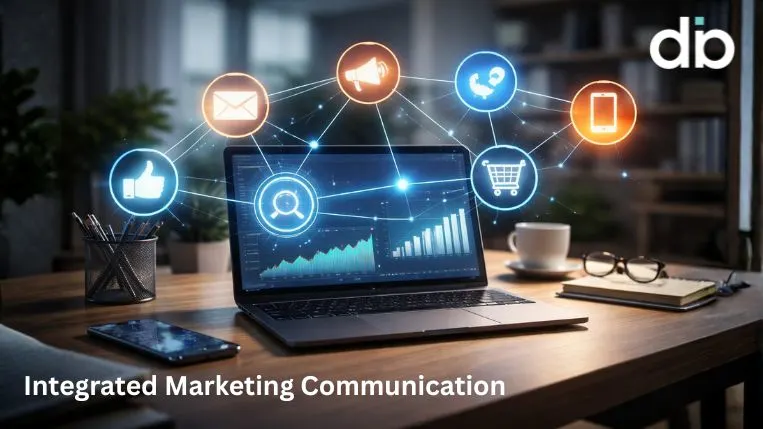
Ever noticed how some brands just feel consistent? You see their Instagram post. Then their billboard. Then their email. And somehow, it all connects. The message feels like it’s coming from the same place, telling the same story, pulling you toward the same thing.
That’s not an accident. That’s integrated marketing communication working.
Now think about brands that feel scattered. Their social media says one thing. Their ads say something else. Their website tells a third story. You’re left confused about what they actually stand for or why you should care.
In today’s world, customers encounter you on social media, search engines, emails, videos, ads, and offline channels—sometimes all in the same day. If your message isn’t consistent across all these touchpoints, you’re basically competing against yourself.
Integrated marketing communication solves this. It brings all your marketing channels together under one unified message and brand voice. Instead of running disconnected campaigns, you create a cohesive experience that actually sticks with people.
Integrated Marketing Communication Definition
Integrated marketing communication (IMC) is a strategic approach that unifies all your marketing channels—advertising, social media, PR, email, content, events—to deliver one consistent message to your target audience.
Instead of treating each channel separately, IMC makes them work together. Your Instagram strategy supports your email campaign. Your blog content reinforces your paid ads. Everything connects.
Think of it like an orchestra. Each instrument plays its part, but they all follow the same sheet music. The result is way more powerful than individual instruments playing random songs.
The integrated marketing communication definition emphasizes key elements: consistency across channels, customer-centric design, strategic coordination with business goals, and synergy where combined efforts create greater impact.
In simpler terms? IMC means your brand speaks with one voice, no matter where customers hear from you.
Importance of Integrated Marketing Communication
Why does this matter? Here’s what integrated marketing communication actually does for businesses.
Builds Stronger Brand Recognition
When people see the same message repeatedly across channels, it sticks. Your brand becomes recognizable. This recognition makes people choose you over competitors they’ve barely heard of. Scattered messaging builds confusion, not recognition.
Improves Customer Trust
Consistency signals professionalism. When your brand says the same thing everywhere, customers believe you mean it. The importance of integrated marketing communication shows up clearly here: unified messaging builds trust way faster than fragmented campaigns.
Creates Better Customer Experience
Customers don’t care about your internal structure. They just experience your brand. IMC ensures that experience feels smooth and connected. Someone clicks your Instagram ad, lands on your website, and everything matches—tone, message, visuals.
Increases Marketing Efficiency
IMC saves money and time. When teams work from the same strategy, you stop duplicating effort. Content gets repurposed across channels. Campaigns build on each other instead of starting from scratch.
Boosts Campaign Effectiveness
Unified campaigns perform better. When your paid ads, organic content, email, and PR reinforce the same message, each touchpoint strengthens the others. Fragmented campaigns don’t have this multiplying effect.
Provides Competitive Advantage
In crowded markets, marketing becomes the differentiator. Brands with strong, consistent communication stand out and win customers. IMC gives you this edge.
Aligns Internal Teams
When everyone works toward the same messaging goals, collaboration improves. Your content team knows what your ads team is promoting. Less confusion. More cohesive output. The importance of integrated marketing communication extends beyond customer-facing benefits—it makes internal operations smoother too.
What Is SEO and How It Works: A Complete Guide
Integrated Marketing Communication Process
How do you actually implement IMC? Here’s the integrated marketing communication process broken into clear steps.
Step 1: Understand Your Target Audience
Who are you trying to reach? What do they care about? Where do they spend time? Create detailed buyer personas. You can’t deliver a consistent message if you don’t know who needs to hear it.
Step 2: Define Clear Objectives
What do you want IMC to achieve? Increase awareness? Generate leads? Boost sales? Set SMART goals that connect to overall business goals, not just marketing vanity metrics.
Step 3: Audit Current Marketing Efforts
Look at everything you’re currently doing. Are messages consistent across channels? Do different channels contradict each other? Which channels perform well? Where are the gaps in customer experience?
This audit reveals what needs to change.
Step 4: Develop Your Core Message
Create the central message that will run through all communications. This isn’t a slogan—it’s the core idea you want associated with your brand. What value do you provide? What makes you different? This becomes the foundation everything else builds on.
Step 5: Choose Your Communication Channels
Not every channel works for every business. Based on where your audience spends time, select channels that make sense: social media, email marketing, content marketing, paid advertising, PR, events, or direct marketing.
Quality beats quantity. Better to do fewer channels really well than spread yourself too thin.
Step 6: Create Your Strategy and Content
Develop specific tactics for each channel that all support your core message. Each piece might be formatted differently for its platform, but the underlying message stays consistent. Plan how channels will support each other.
Step 7: Execute the Campaign
Roll out your integrated campaign. Maintain consistent messaging, visuals, and brand voice across all channels. Coordinate timing so different elements support rather than compete with each other.
Step 8: Measure and Optimize
Track key performance indicators tied to your objectives. Which channels drive engagement? Where do customers enter and exit? Which messages resonate? What’s the ROI?
The integrated marketing communication process is iterative. Use data to continuously improve.
Which is the Best Language for Web Development? Complete Guide for Websites
Tools Used in Integrated Marketing Communication
IMC requires coordination, which means you need the right tools:
CRM Systems: Tools like HubSpot, Salesforce, or Zoho centralize customer data from all touchpoints.
Marketing Automation: Platforms like Mailchimp or ActiveCampaign automate email sequences, social posting, and lead nurturing while maintaining consistent messaging.
Social Media Tools: Hootsuite, Buffer, or Sprout Social manage multiple accounts, schedule posts, and maintain brand voice across platforms.
Analytics Tools: Google Analytics or Adobe Analytics track performance across all channels in one place—crucial for understanding IMC effectiveness.
Project Management: Trello, Asana, or Monday.com keep teams aligned on timelines and deliverables when multiple people work across multiple channels.
Examples of Integrated Marketing Communication
Apple
Apple’s IMC is legendary. Every touchpoint—product launches, ads, retail stores, website, packaging—communicates premium, innovative, beautifully designed technology. The minimalist aesthetic and premium positioning stay absolutely consistent everywhere.
Nike
Nike’s “Just Do It” campaign runs through everything. Whether it’s a billboard, Instagram post, YouTube video, or sponsorship, the message is consistent: empowering athletes to push their limits.
Coca-Cola
Coca-Cola’s focus on happiness and togetherness appears everywhere. TV commercials, social media, packaging, and experiential marketing all communicate the same emotional associations. The red color, distinctive logo, uplifting messaging—perfectly integrated.
Dove
Dove’s “Real Beauty” campaign exemplifies IMC done right. From TV ads to social media to packaging—everything connects. The campaign maintained consistency across years and countless touchpoints, fundamentally changing brand perception.
These examples share common threads: clear core message, consistent visual identity, unified brand voice, and strategic coordination.
READ MORE- OFF-PAGE SEO , ON-PAGE SEO , LOCAL SEO , TECHNICAL SEO
Conclusion
Integrated marketing communication isn’t just another marketing buzzword. It’s a fundamental shift in how businesses approach customer engagement.
In a world where customers encounter hundreds of brand messages daily, consistency cuts through the noise. When your brand speaks with one voice—whether on Instagram, in someone’s inbox, on a billboard, or through PR—you build recognition, trust, and loyalty that scattered messaging never achieves.
The integrated marketing communication definition is simple: make everything work together. The integrated marketing communication process requires planning and coordination. The importance of integrated marketing communication only grows as media fragments further and customer journeys become more complex.
At Digital Ally, we combine data-driven strategy with creative execution across every channel you need. From tech development and SEO to paid media, content marketing, and social media, we ensure all your marketing efforts speak with one powerful voice.
Why is integrated marketing communication important for businesses?
It helps businesses build brand recognition, gain customer trust, improve marketing results, and create a smoother experience for people across different platforms.
What is the integrated marketing communication process?
The IMC process usually includes understanding your audience, setting goals, developing a core message, choosing marketing channels, running campaigns, and measuring results.
What channels are used in integrated marketing communication?
Common channels include social media, email marketing, paid ads, content marketing, public relations, events, and websites, all working together with the same message.
How does integrated marketing communication improve marketing results?
When people see the same message across many platforms, they remember the brand better and are more likely to trust it and take action.
